
Max. Elevation




Annapurna IV (7,525 m) is one of the least-climbed 7,000-meter peaks in the Annapurna range of Nepal. Located above Humde village in the Manang District, the mountain lies between Annapurna II (7,937 m) and Annapurna III (7,555 m) and is clearly visible from several sections of the Annapurna Circuit Trek.
First climbed on 30 May 1955 by a German expedition led by Heinz Steinmetz, the standard route follows the North Face and Northwest Ridge. The expedition begins along the Annapurna Circuit, using well-established teahouse infrastructure until Humde, before trekking to base camp at approximately 4,800 meters.
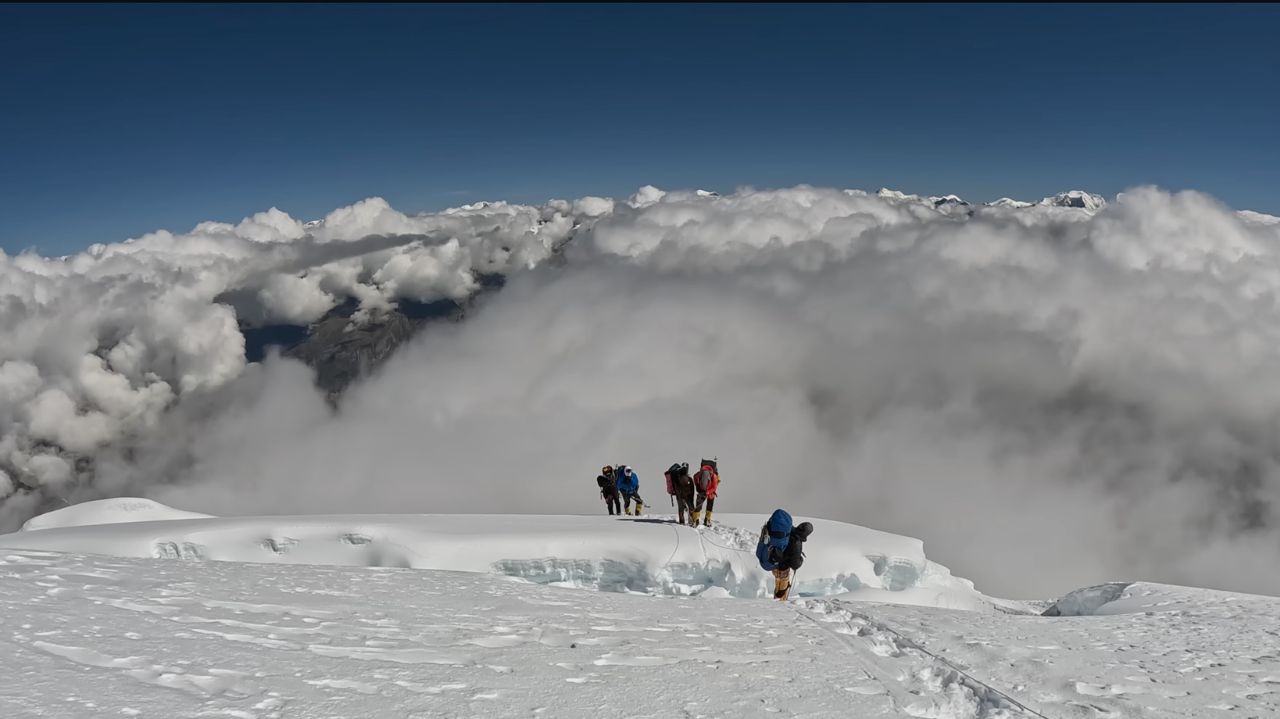
The climb is typically organized with three high camps and includes glacier travel, steep snow slopes, sections of hard ice, fixed rope climbing, and exposed ridgelines. The route is graded TD+, making Annapurna IV a semi-technical peak suitable for experienced mountaineers.
Compared to other peaks in the Annapurna massif, Annapurna IV is considered the least technical and least objectively dangerous, while still offering a demanding and authentic Himalayan expedition. It is an ideal training peak for climbers planning future ascents of 8,000-meter mountains, including Mount Everest.
With more than a decade of experience, Alpinist Club provides professional expedition management, experienced Sherpa climbers, and complete logistics for Annapurna IV expeditions. Our recent successful climbs on this mountain ensure a refined strategy and strong safety standards.
You will arrive at Tribhuvan International Airport in Kathmandu, where our local team will welcome you warmly. After clearing customs and collecting your luggage, you will be transferred to your hotel. The rest of the day is for settling in, relaxing after your flight, and acclimatizing to the altitude. In the evening, you can enjoy a light walk around Thamel, the lively tourist district, or rest in preparation for the days ahead.
This day is dedicated to getting ready for the expedition. In the morning, there will be a detailed expedition briefing covering the trekking and climbing plans, safety protocols, and equipment usage. You can check and organize your gear, purchase any last-minute necessities, and ensure your backpack is ready. The afternoon can be spent exploring the cultural highlights of Kathmandu, such as Swayambhu Nath (Monkey Temple) or Durbar Square.
After breakfast, you will drive to Besi Shahar, the gateway to the Annapurna region. The journey takes approximately 6–7 hours, passing through picturesque landscapes, terraced fields, and rivers. Besi Shahar is a charming town that serves as the starting point for your trekking route. You will check into a local guesthouse and rest for the night.
The drive continues through the Marsyangdi Valley, with stunning views of the surrounding mountains and terraced hills. Chame is the district headquarters of Manang and is a beautiful settlement located at 2,630 meters. The village offers a great introduction to the local culture and a chance to acclimatize slightly before trekking.
You will drive to Lower Pisang first, then continue to Upper Pisang, a scenic village perched along the mountainside. Upper Pisang provides spectacular views of Annapurna II, Pisang Peak, and the surrounding Himalayan range. This is an excellent spot for acclimatization and to experience the traditional lifestyle of the Manang region.
The trek begins from Upper Pisang to Humde, a small village that marks the entry to higher Himalayan terrain. The path passes through rocky trails, pine forests, and occasional waterfalls. Humde is a quiet village where trekkers rest and adjust to higher altitudes.
A full rest day in Humde helps your body acclimatize. You can explore the surrounding trails, interact with local villagers, and prepare physically and mentally for the upcoming trek to the basecamp. Optional short hikes nearby can aid in acclimatization.
This is a challenging but rewarding trek to the Basecamp of Annapurna IV. The trail gradually ascends through alpine terrain, glaciers, and moraines. The scenery includes snow-capped peaks, deep valleys, and pristine mountain streams. Upon arrival at Basecamp, you will set up tents and get ready for the rotation climbs ahead.
The summit attempt begins from Basecamp, moving through Camp I and Camp II. The ascent involves technical climbing, rope work, and navigating glaciers and ice slopes. After reaching the summit at 7,525 meters, you will descend carefully back to Basecamp. The exact timing depends on whether windows and your acclimatization progress.
After the summit attempt, you will trek back down to Humde. The trail offers a sense of accomplishment and allows time to relax after the intense climb. Overnight stay is at a local guesthouse.
You will drive down to Besi Shahar, retracing the route taken earlier. The descent is scenic, passing through forests, rivers, and villages. Overnight stay in Besi Shahar.
The journey continues back to Kathmandu, where you will check into a hotel and enjoy the comfort of city life. Evening at leisure for shopping, sightseeing, or rest.
A full day to relax or explore Kathmandu at your own pace. Options include visiting Pashupatinath Temple, Boudhanath Stupa, or enjoying shopping for souvenirs in Thamel. This is a perfect opportunity to celebrate your expedition’s success.
You will be transferred to Tribhuvan International Airport for your onward flight. Farewell to Nepal and the memories of a lifetime from the Annapurna region.
 Note:
Note:
If you have a private group and prefer a personalized experience, we can organize a custom trip tailored to your requirements and group size, running it any day you choose.
Plan a Private TripYour guide, from your arrival in Kathmandu until your departure, is responsible for the success of your trip and oversees your team. Do not hesitate to ask him questions, respect his position as the team leader, and above all follow his advice! Often, your guide is the only English-speaking member of the team. In the mountains and, especially when during high-altitude travels, your guide is responsible for the safety of the group. The instructions he gives and the remarks he makes to all participants must be carefully followed. The interest and safety of the trekking group must be preserved, even when it may be to the detriment of an individual member of the group.
Read More
The keystone of your success on all of our expeditions, we are systematically on a ratio of one high altitude sherpa per participant. He accompanies you for the key moments of the ascent and during the summit push. He is particularly experienced for high altitudes. He has participated in several expeditions at more than 8,000 meters, successfully leading participants to the summit. We select him for you. He is generally English-speaking. He may not be permanently at your side in the rotations between the camps, his role also being to carry out the portages to set up the camps.
There is a summit bonus for your high-altitude sherpa to be paid on-site in cash after the climb. This bonus is due from the moment you leave the last camp towards the summit during your summit push attempt.
His role is important in leading the strategy necessary for success: rotation in the altitude camps, acclimatization of each participant, and study of weather reports to decide on the optimum moment to launch the summit push.
The expedition leader represents the Alpinist Club to the group, . Mainly based at the base camp, he can accompany you to the high-altitude camps to supervise the smooth running of the expedition's logistics. He makes the necessary decisions that may be required. His authority is preponderant and unavoidable. You must respect his decisions as well as those taken collectively.
A kitchen team will be present at the base camp.
There is a team of porters who help us set up the base camp with all the equipment and the kitchen. Beyond that, the team of high-altitude sherpas takes over. They help us in particular in setting up the high altitude camps and in portaging from the base camp.
Each participant will have to take care of carrying their personal belongings and altitude food. The collective equipment is transported by the Nepalese team. Our backpack will be calibrated from 10 to 12 kg.
For unforeseeable reasons at this stage, including weather but also the fitness or lack of fitness of the participants, your guide may have to adapt or even interrupt your program, at any time if he deems it necessary, whether for the whole group or for a few participants, and for the smooth running of your trip. He remains the sole judge and guarantor of your safety.
This program is designed for participants in excellent physical condition, with endurance experience and strong mental resilience. High-altitude challenges require significant mountain experience, including hiking, trekking, or mountaineering. Participants should know how to use ropes and operate in a roped party, whether alone or with a guide.
Experience with high-altitude expeditions and basic mountaineering skills (handling crampons, harness, ice axe, and ropes) is required. The route includes mild challenges, such as snow slopes at 30–35° and glacial passages. Suitable for those with some mountaineering experience who want to progress. Weather and environmental conditions can increase difficulty.
For more preparation, consider our mountaineering courses or expeditions to progressively higher peaks (5,000m to 7,000m).
Hotel in Kathmandu: In Kathmandu, we will provide you with a single room in a hotel
During the trek, You will stay in the Lodge. Lodges in Nepal are very random in terms of comfort. Lodges can look like a refuge or sometimes a homestay. They are mostly family homes with double, triple or dormitory rooms. Toilets and showers are always separate.
Base camp: At the base camp, we are in individual tents. A base camp for several weeks must be as comfortable as possible, to allow a good recovery on returning from the high-altitude camps. It must allow us to face a period of bad weather in the best possible conditions. Each participant has their tent with a comfortable mattress. A heated mess tent is the main living area. Tables and chairs are permanently installed there. We also have a shower tent and a toilet tent (solid waste in evacuated barrels)
High Altitude Camps: During the ascent, at the high camps, we have a high-altitude tent for 2 people, or even 3 people at the last camps.
Hygiene & dry cleaning
Toilets: The base camp has toilets and toilet paper. Be sure to wash your hands with hydroalcoholic gel (to be taken from your personal pharmacy) after each visit to the toilet. For the higher camps, we recommend that you bring a bottle that you will use to urinate at night to avoid having to go out.
Upon arrival in Kathmandu, a welcome dinner is provided on the first evening. Similarly, upon return from the expedition, a farewell meal is provided.
In the cities, many small (or large) restaurants allow us to discover the typical local cuisine. Except for Kathmandu, breakfasts and evening meals are prepared by the kitchen team or the lodge cooks and are taken in the lodge dining room or under the mess tent. Depending on the profile of the stages (length of the day's walk and/or presence of water), midday snacks will be served hot or cold in the form of picnics.
Here is a typical one-day menu during the trek:
During the trek, meals are prepared by the kitchen team in the lodge and are taken in the lodge dining room
Base camp Meal: All meals are prepared by the kitchen team using local ingredients including rice, pasta, lentils, potatoes, vegetables, eggs, a little meat, etc. They are served to you in a Dinning tent. Non-alcoholic hot drinks such as tea or coffee are offered to you at will. We recommend that you stay constantly hydrated.
High Altitude Camps Meal: At high altitudes, eating can be difficult, and freeze-dried food is usually necessary. While this food might taste fine at lower elevations, it can quickly become unappealing in high-altitude camps. we will provide freeze-dried dishes and share your preferences. We’ll do our best to match these, depending on available stock. You can also bring up your favorite foods for the expedition.
for higher camp: Each tent is equipped with a stove to melt snow for water, prepare freeze-dried meals, and make hot drinks. Gas cartridges will be provided
Stay Hydration: Bring water purification tablets (like Hydroclonazone or Micropur) to treat water, depending on the source and your guide's advice. Purified water may sometimes be available, reducing the need for bottled water, which is less eco-friendly.
Glacier meltwater lacks minerals, which your meals partly provide. However, relying only on tea, coffee, or plain water can lead to poor hydration, stomach issues, and mineral deficiencies on long expeditions. To avoid this, pack 2–3 tubes of mineral salt tablets (10 tablets per tube) to add to your water bottle.
All transfers are provided in private vehicles.
For various reasons, we prefer trekking to reach the base camp: the progression designed for acclimatization allows you to prepare yourself physically and psychologically for the climb. It is also the ideal time to get to know the team and to start building a team spirit and cohesion.
The return is also planned as a trek. That said, the possibility of taking the helicopter on the way back is possible for an additional fee.
The group is composed of 1 to 10 participants maximum. The number of participants is voluntarily limited to allow a better immersion, to not embarrass our hosts, to develop spaces of freedom and to allow a great flexibility of operation. However, the maximum number can be exceeded in the case where the last person who registers wishes to travel with another or several other people. The services will not be modified and the conditions of the trip will be identical as a result.
All logistical equipment is provided, including individual tents at the base camp with mattresses, mess tent, shower tent and toilet tent, as well as all collective and individual cooking equipment. At altitude, tents, stoves with gas cartridges, ropes and anchors.
Personal equipment is not provided. A complete list is provided later in this document. It will be refined with us during the preparation days and up until the time of departure according to your questions.
High altitude sleeping bags, full suits and/or good quality down jackets are expensive items that you may not use often. We can rent you this specific equipment for the duration of the expedition. You must then return the equipment cleaned and in the condition in which it was given to you (deposit required).
We have at least one Iridium satellite phone that is used only for logistical, weather and security purposes. Under certain conditions, participants may use it. For these private uses, please contact us.
The camps will be permanently connected by radio. Expedition leader, participants and high-altitude sherpas will also have access to this.
The expedition will have a hyperbaric chamber at the base camp, and a complete, lighter pharmacy at the higher camps.
Preparing for the trek requires several months of preparation with 4 to 6-hour walks every weekend for stamina and participating in a sport that requires short periods of high exertion.
Being in good health is essential to enjoy your Alpinist Club trip fully. If your last medical visit was more than four years ago, please get another general physical exam and tell your doctor the nature of your trip (climate, altitude, difficulty, etc.). The altitude also has the effect of reviving dental problems or other chronic pain, so getting a dental checkup is also prudent. If you are undertaking a high-altitude expedition, we advise you to consult a mountain medicine specialist.
This trip takes place at high altitudes so some people may experience altitude-related discomforts like headaches, loss of appetite, and swelling of limbs. Most of these symptoms usually go away within a few days, but sometimes they can develop into a serious illness: pulmonary or cerebral edema. There are no preventive drugs for AMS. Diamox diuretic is often effective for symptomatic relief, but you should first check with your doctor to verify that it is not contraindicated. Think about it before you go.
Less More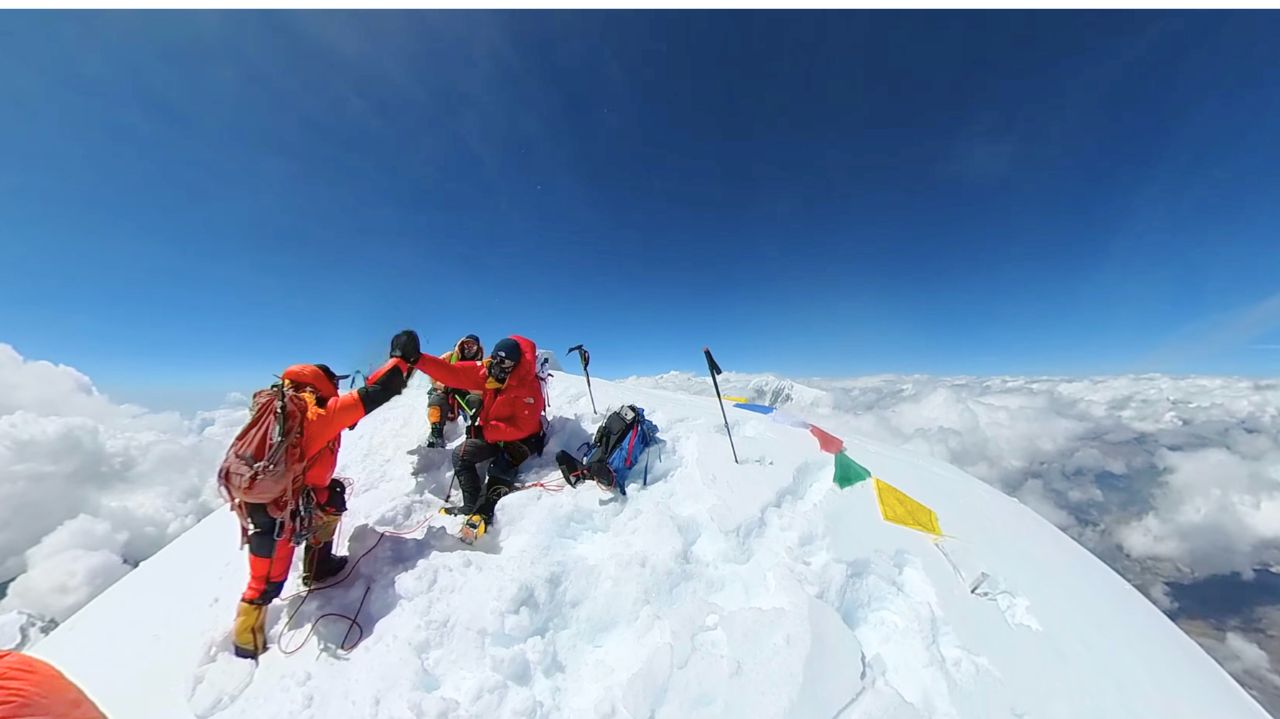


| Image | Trip | Dates | Price | Action |
|---|---|---|---|---|

|
Annapurna IV Expedition (7,525 m) 39 Days LeftAutumn Expedition Annapurna 4 |
Start:
2026-09-17
End: 2026-10-25 |
$ 7,999.00 | BOOK NOW |


