Lower Dolpo trek with Phoksundo lake

The Lower Dolpo Trek is a remote and adventurous journey in the western Himalayas of Nepal, offering breathtaking views of pristine landscapes. The trek takes you through ancient villages, rugged terrain, and serene alpine valleys. A highlight of the trek is Shey Phoksundo Lake, known for its striking turquoise-blue waters and the stunning backdrop of snow-capped mountains. Along the way, you’ll experience the unique Bon culture, visit highland monasteries, and encounter rare wildlife. This off-the-beaten-path trek is ideal for trekkers seeking solitude and a deep connection with nature.

Lower Dolpo is situated in the northwest region of Dolpa in Nepal. The place is well known for its remote and rugged Himalayan landscapes. The lower Dolpo trek with Phoksundo Lake is an amazing journey.
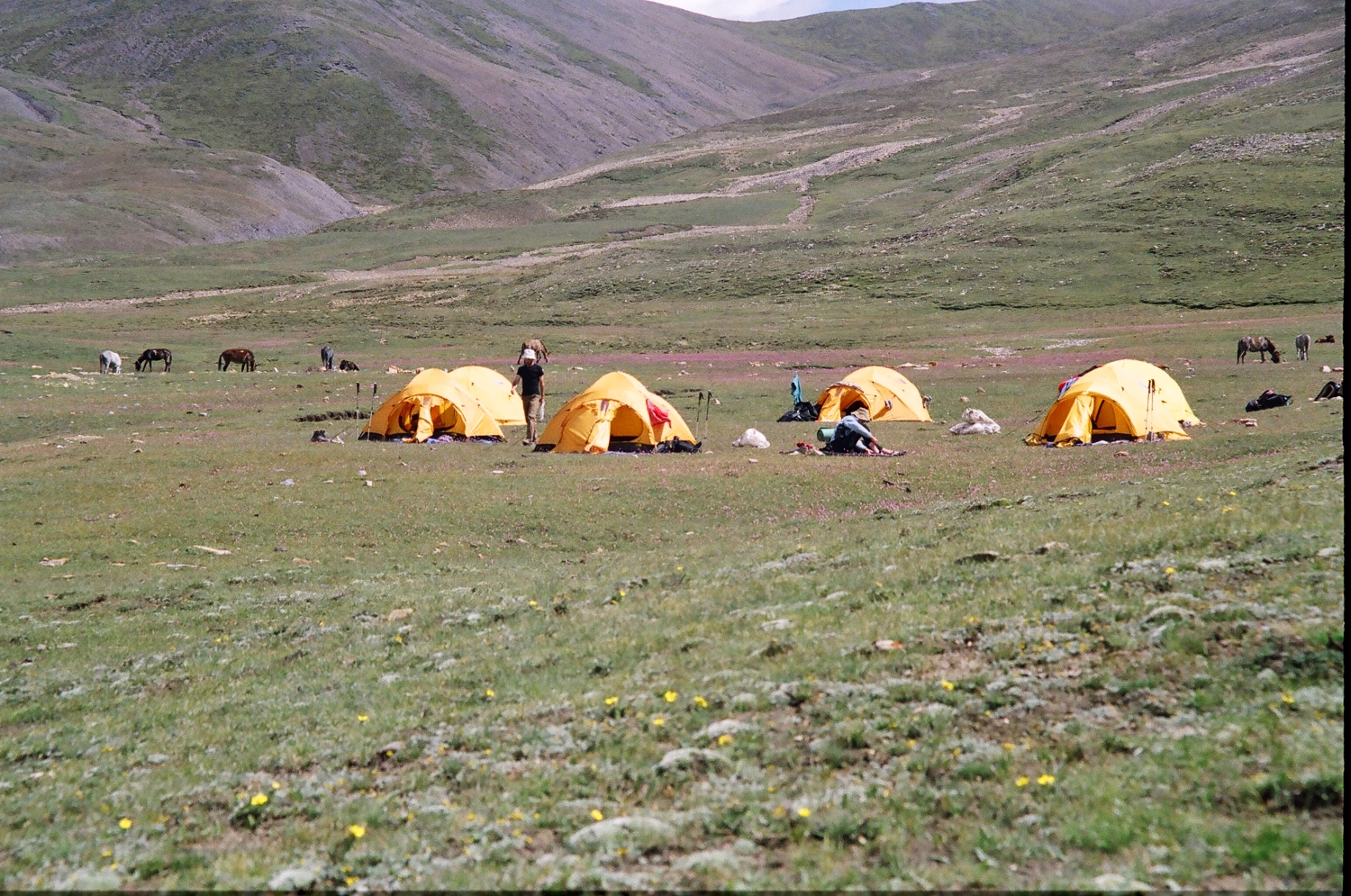
A trek under tent and far from the crowds.
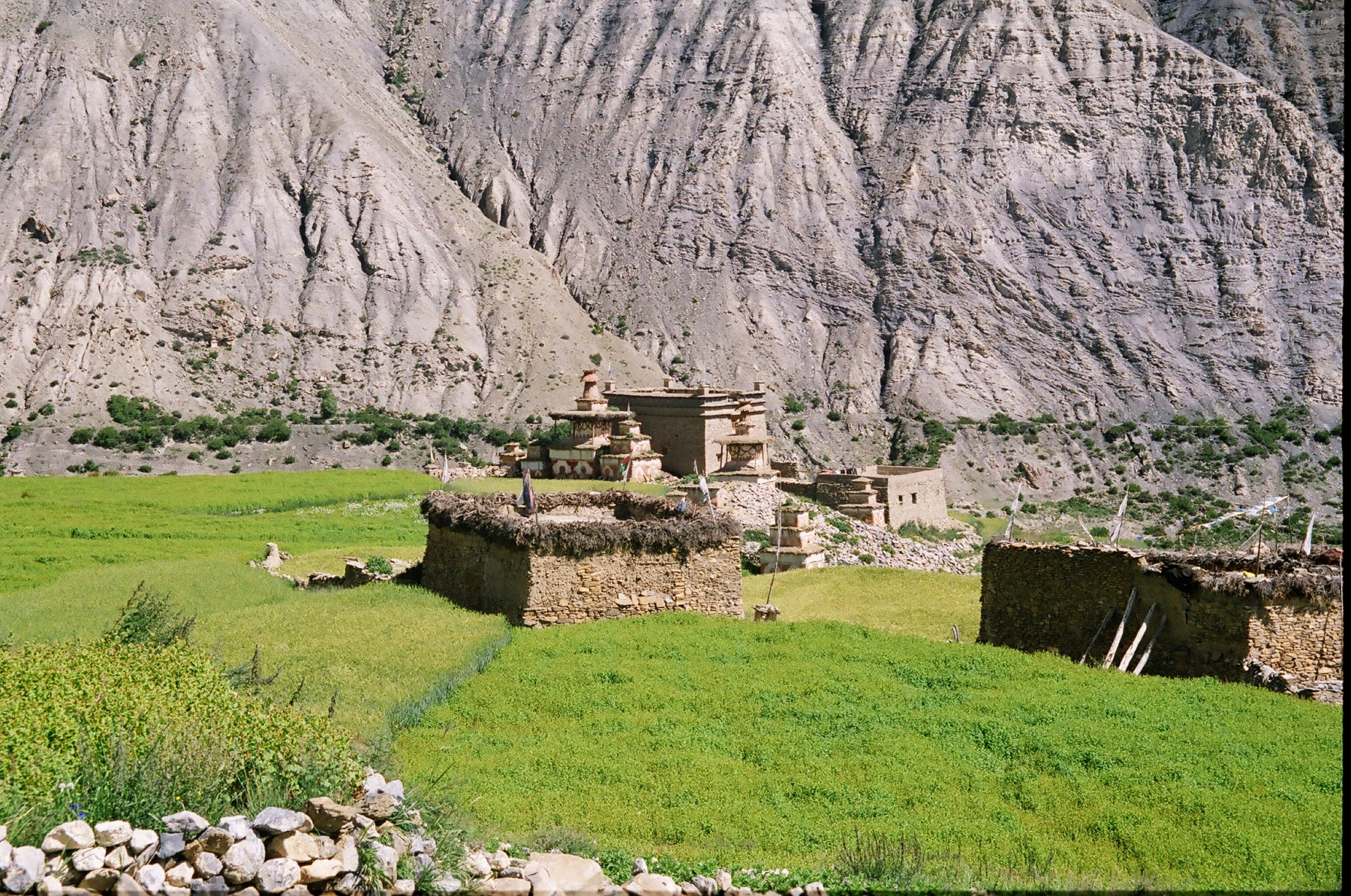
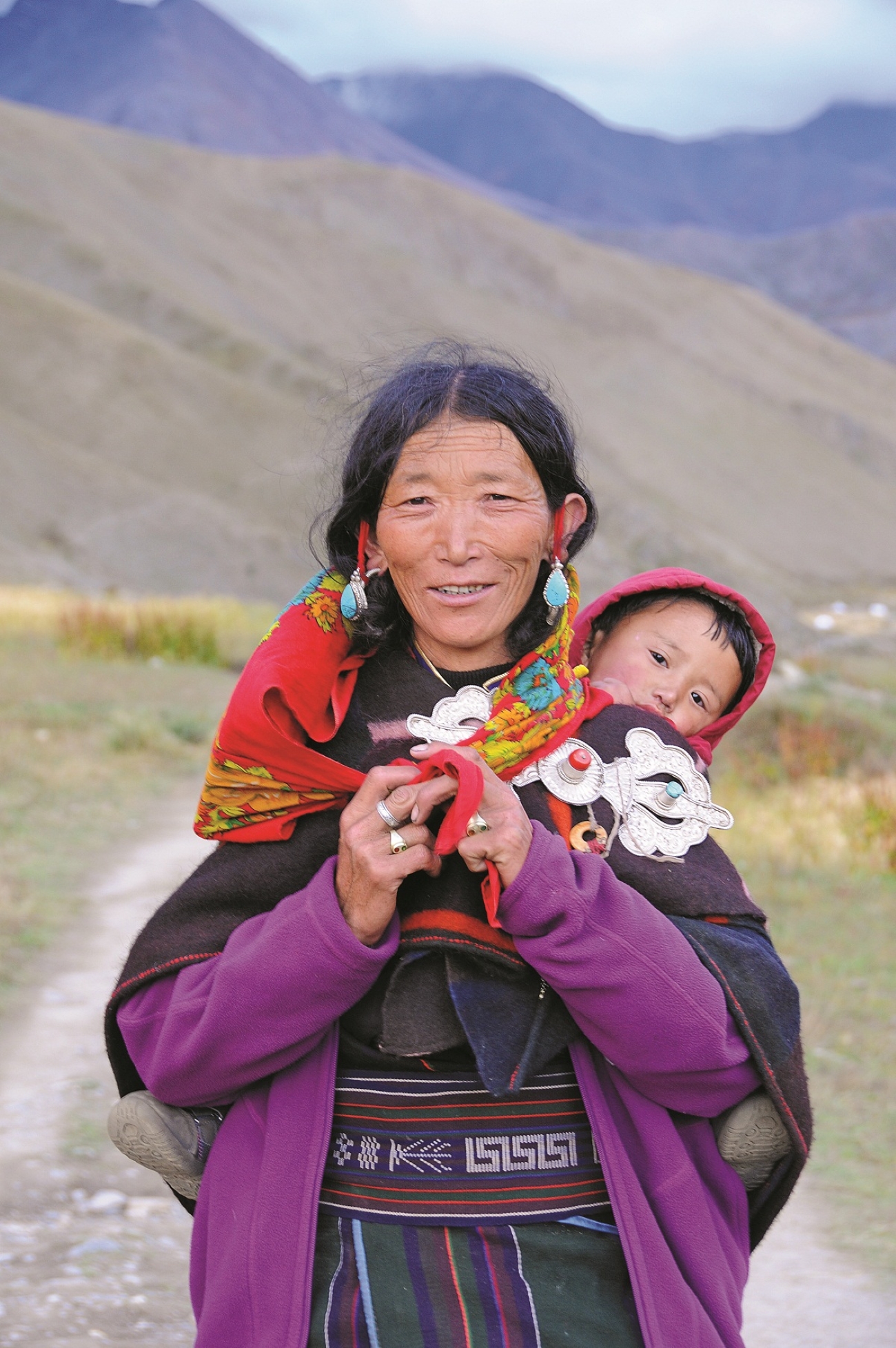
A preserved Tibetan culture.
The turquoise blue lake of Phoksundo.
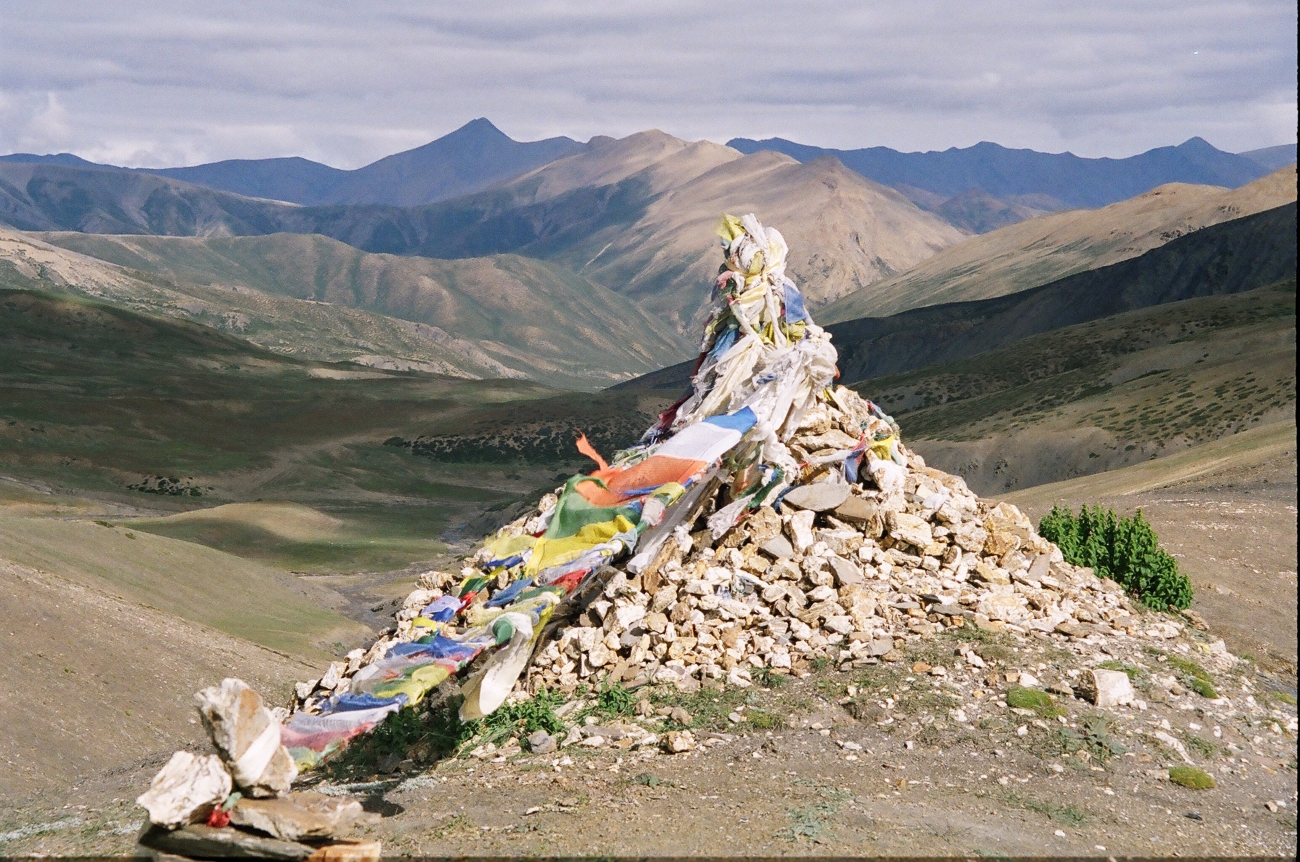
2 passes over 5,000m Dho Tarap Valley.

Overview

The trek is adventurous, allowing exploration of the untouched beauty of the Dolpo region.Its rugged landscapes, ancient Buddhist monasteries, and stunning Phoksundo Lake will mesmerize you. This trek is a combination of natural beauty, cultural immersion, and physical challenge. The main attraction of the trek is Phoksundo Lake. This turquoise lake is located at an elevation of 3,611 meters. The lake is one of Nepal's most beautiful and deepest lakes. The lake is considered to be sacred by the locals. The lake becomes more attractive due to its surrounding landscapes, unique rock formations, and alpine vegetation.

The trail will take you through the Shey Phoksundo National Park. This park is the largest in Nepal and has diverse flora and fauna—various species such as snow leopards, blue sheep, and the Himalayan musk deer. The trail will lead to the lush forests with a stunning landscape that adds a unique experience of Nepal’s biodiversity.

Depending on the itinerary and the fitness of the trekkers, the trek usually takes 18-20 days. The ideal seasons for the lower Dolpo trek are Spring and Autumn. Since it is a restricted area, trekkers must obtain a Shey Phoksundo National Park permit. The lower Dolpo trek with Phoksundo Lake is an adventure journey rewarded with a mixture of beauty and cultural immersion. It is an ideal trek for trekkers who are seeking an off-beaten-path adventure in the Himalayas.

Itinerary

Expand All

Upon your arrival in Kathmandu, our local team warmly welcomes you at the airport. You will then be escorted to the hotel, where you can enjoy some well-deserved relaxation. The itinerary includes a briefing about the trek's progress and presentation, followed by leisure time. If you arrive in the morning, you'll have the entire day at your disposal. This can be used for rest or for those interested in exploring the surroundings freely. It's an ideal chance to experience Nepalese culture and indulge in the local culinary delights.

  • Transfer to the hotel
  • Final altitude: approximately 1,350 m
  • Meals: Dinner
  • Accommodation: one night in the hotel

We take a spectacular mountain flight from Nepalgunj to Juphal (weather permitting), offering aerial views of patchwork fields, rivers, and remote ridge-top villages. Upon arrival, we meet our trekking crew and begin walking through Juphal, a lively village where daily rural life unfolds—fields of lentils and chilies, farmers at work, and traditional homes.

We then descend gradually to Dunai (2,100 m), the administrative center of the Dolpo district.

Note: If the flight is canceled due to weather, a helicopter transfer to Juphal may be possible, subject to favorable conditions and enough participants to share the charter. Please bring $350 in cash for this option.

  • Transport: Private vehicle & domestic flight
  • Flight time: 1 hour | Trekking: ~3 hours
  • Elevation gain/loss: +150 m / -500 m |
  • Final Altitude: 2,100 m
  • Meals: Breakfast – Lunch – Dinner
  • Accommodation: Tent

Following the Thuli Bheri River upstream, we trek toward Tarakot, an ancient caravan town marking our entry into Buddhist territory. Along the way, we encounter mule caravans, small hamlets with chili gardens, and abundant wild hemp. The trail passes through a dramatic gorge beside a fast-flowing river. We camp near the river below Tarakot, which sits high on a ridge.

  • Trekking: 5 hours
  • Elevation gain/loss: +580 m / -300 m
  • Altitude: 2,350 m
  • Meals: Breakfast – Lunch – Dinner
  • Accommodation: Tent

We cross a long suspension bridge at the confluence of the Thuli Bheri and Barbung Rivers, entering the Tarap River valley via Kanigaon. We visit the Kanigaon monastery, a clear sign that we are now in a Buddhist region.

The trail climbs through Himalayan cypress forests and impressive gorges before widening near Laina.

  • Trekking: 7 hours
  • Elevation gain/loss: +1,200 m / -400 m
  • Final Altitude: 3,200 m
  • Meals: Breakfast – Lunch – Dinner
  • Accommodation: Tent

We continue through the spectacular Tarap gorges, following crystal-clear waters along narrow ledge trails before reaching gentler “Nepalese flat” terrain framed by spruce and juniper forests.

    • Trekking: 5 hours
    • Elevation gain/loss: +800 m / −450 m 
    • Final Altitude: 3,510 m
    • Meals: Breakfast – Lunch – Dinner
    • Accommodation: Tent

    A long but rewarding day following the Tarap River, crossing it several times by bridges and even a ladder. Juniper and daphne grow abundantly, and we pass caves that give Toltol its name (“hole” in Nepali).

    We cross a small, unnamed pass at 3,800 m marked by prayer flags and a labtse shrine. Herds of yaks, sheep, and goats roam the open landscapes. We may spot bharal (blue sheep) before reaching the vast Tibetan Plateau.

    At sunset, we arrive in Dho Tarap, a classic Dolpo village with mani walls and chortens.

    • Trekking: 7 hours
    • Elevation gain/loss: +1,000 m / -600 m 
    • final Altitude: 4,000 m
    • Meals: Breakfast – Lunch – Dinner
    • Accommodation: Tent

    A day for acclimatization and cultural exploration. We visit the well-preserved Tibetan villages and monasteries of Upper Tarap, including the Nyingma monasteries of Ribo Bhumpa and Doro, and the Bön-Po monastery of Shipchhok.

    Leaving Dho Tarap, we follow the Thakchin Khola to Tokyu, passing magnificent chortens. We may see flocks of sheep and goats and spot bearded vultures overhead. Students from the Crystal Mountain School often show us around their school.

    • Altitude: 4,200 m
    • Meals: Breakfast – Lunch – Dinner
    • Accommodation: Tent

    n the morning, we watch children setting off on foot to school from Dho. We leave the Saldang trail and walk along gentle slopes through thorny vegetation.

    We reach the base of Numa La Pass near Shering Gompa, a small and isolated hermitage. The afternoon is free for rest or short walks before tomorrow’s high pass crossing.

    • Trekking: 3 hours
    • Elevation: +800 m
    • Final Altitude: 4,700 m
    • Meals: Breakfast – Lunch – Dinner
    • Accommodation: Tent

    We cross Numa La Pass (5,230 m) with sweeping views of the Himalayan range to the south and the Tibetan Plateau to the north. Dhaulagiri and Nilgiri dominate the skyline.

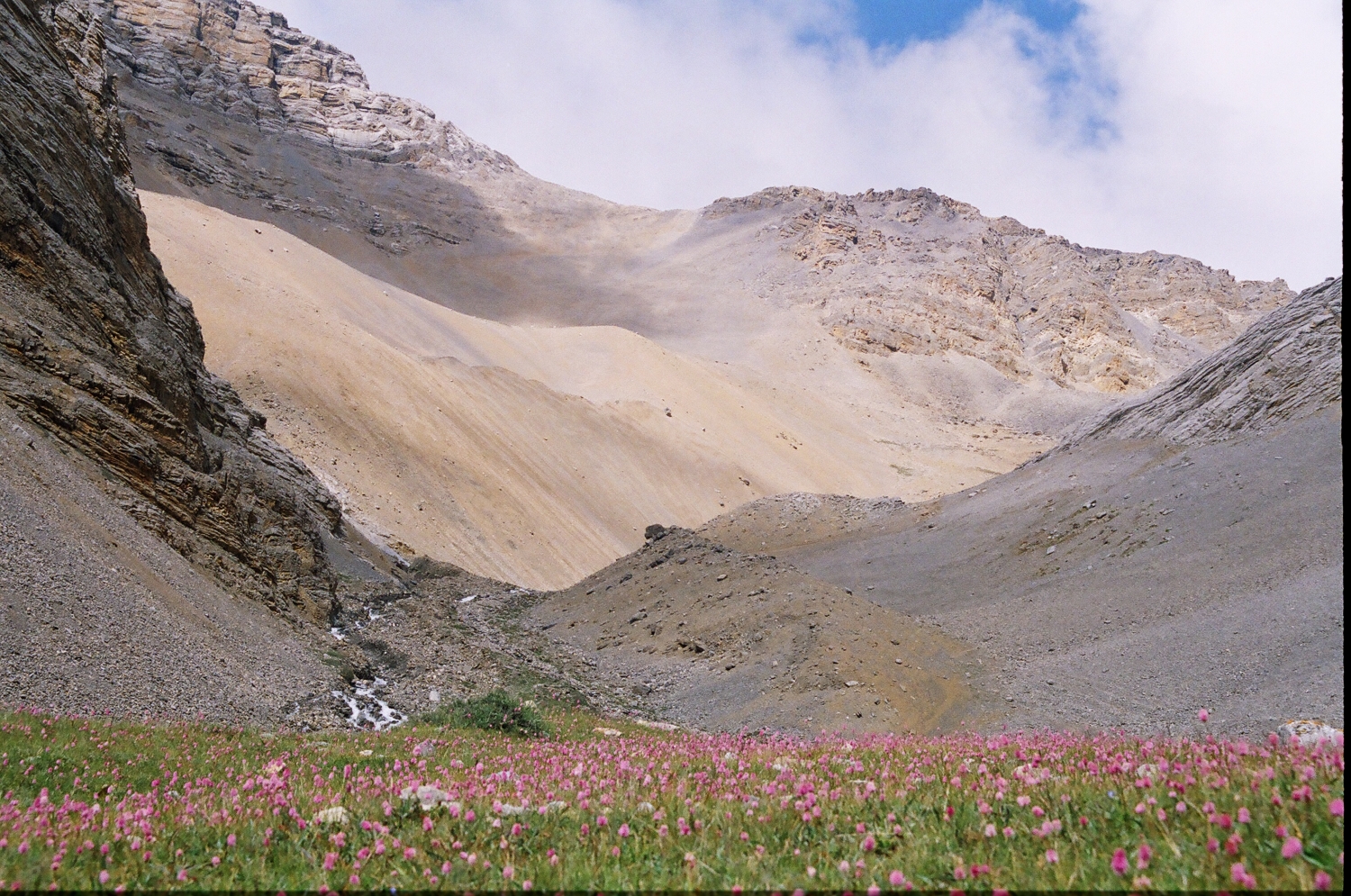
    The colorful rock formations—ochre, orange, and pink—create a dramatic landscape. This is snow leopard territory. We descend to camp below Baga La, near vast pastures used by shepherds and salt caravans. Views of the Norbung Kang Glacier (6,085 m).

    • Trekking: 6 hours
    • Elevation gain/loss: +600 m / -900 m
    • Final Altitude: 4,450 m
    • Meals: Breakfast – Lunch – Dinner
    • Accommodation: Lodge or tent

    A gentle climb leads to Baga La Pass (5,090 m), the final high pass of the trek. Kanjirowa Himal (6,612 m) comes into view.

    A long descent follows along the Ghuchun Khola, passing ice formations, to a traditional yak kharka (pasture) near the Maduwa Khola. Below lies the village of Maduwa with its terraced fields.

    • Trekking: 7 hours
    • Elevation gain/loss: +700 m / -1,400 m
    • Final Altitude: 3,760 m
    • Meals: Breakfast – Lunch – Dinner
    • Accommodation: Tent

    One of the most spectacular days of the trek. The trail clings to cliffs high above the confluence of the Maduwa Khola and Phoksumdo River, revealing breathtaking views of Phoksumdo Lake and its turquoise waters.

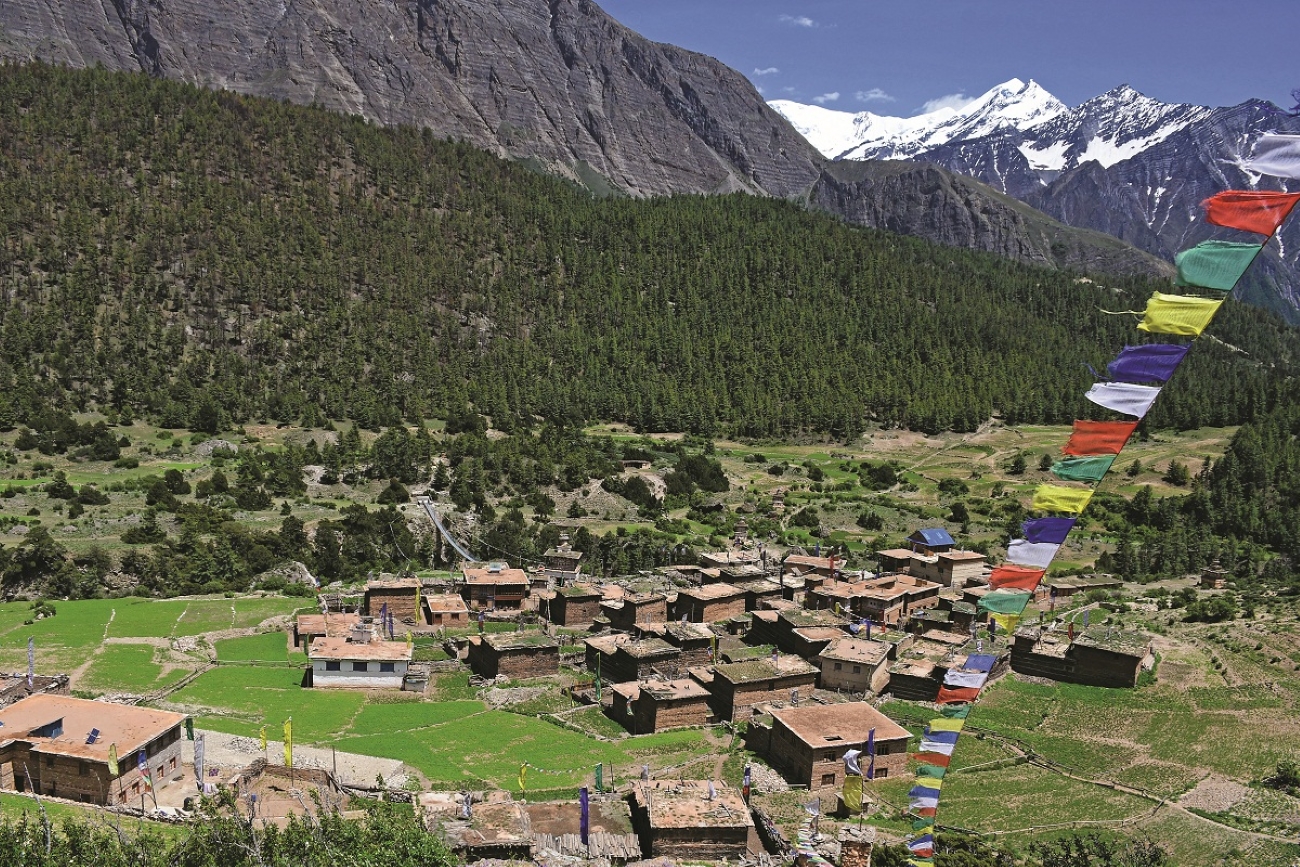
    We arrive at Ringmo, a remote village on the lake’s shore, surrounded by pine forests, juniper trees, yak pastures, chortens, and traditional homes. In the afternoon, we explore the village and visit the ancient Bön monastery. Evening life in Ringmo is lively, with yaks returning from pasture and villagers going about daily chores.

    • Trekking: 3 hours
    • Elevation gain/loss: +400 m / -550 m
    • Final Altitude: 3,590 m
    • Meals: Breakfast – Lunch – Dinner
    • Accommodation: Tent

    If permitted, we walk along the dramatic balcony trail overlooking Phoksumdo Lake, famous from the film Himalaya by Éric Valli.

    After days in rocky terrain, the surrounding forests feel refreshing. We climb above Phoksumdo Waterfall, Nepal’s highest, and pass through the winter village of Palam before reaching Sanduwa.

    • Trekking: 6 hours
    • Elevation gain/loss: +100 m / -600 m
    • FinalAltitude: 3,050 m
    • Meals: Breakfast – Lunch – Dinner
    • Accommodation: Tent

    We hike up the valley to a viewpoint at 3,700 m for a final look at Phoksumdo Waterfall. Passing Palam and the Phoksumdo National Park center, the vegetation becomes denser as we follow the Suligad River to Chepka.

    • Trekking: 6 hours
    • Elevation gain/loss: +300 m / -600 m
    • FinalAltitude: 2,690 m
    • Meals: Breakfast – Lunch – Dinner
    • Accommodation: Tenta

    We follow the Phoksumdo Khola and Suligad River through gorges and forest. The valley gradually opens near Suligad village, with barley and mustard fields. Medicinal plants grow abundantly.

    A final series of ascents and descents brings us back to Dunai.

    • Trekking: 5 hours
    • Elevation gain/loss: +300 m / -900 m 
    • Final Altitude: 2,100 m
    • Meals: Breakfast – Lunch – Dinner
    • Accommodation: Lodge or tent

    Final trekking day. We follow the Bheri Khola and climb to the Juphal airstrip. Village life is vibrant—women shell corn, thresh grain, and tend gardens.

    • Trekking: 4 hours
    • Elevation: +400 m
    • Final Altitude: 2,450 m
    • Meals: Breakfast – Lunch – Dinner
    • Accommodation: Lodge or tent

    Morning flights to Nepalgunj and onward to Kathmandu. Free time upon arrival.

    Note: If flights are canceled, a helicopter transfer to Pokhara may be possible under similar cost-sharing conditions ( $ 350 cash).

    • Transport: Domestic flights
    • Meals: Breakfast (lunch & dinner not included)
    • Accommodation: Hotel

    Safety day, which can be used during the trekking or as a free day in Kathmandu

    • Meals: breakfast – free lunch (not included) – free dinner (not included)
    • Accommodation: overnight at the hotel.

    Free time depends on the departure time of your flight, and our representative will drop you at the airport, ending your journey in Nepal. We hope to be of service to you again. Thank you, and safe travels.

    • Accommodation: Hotel 
    • Elevation: 1,440 m 
    • Meal: Breakfast 

    Everest Very High altitude Note:

    If you have a private group and prefer a personalized experience, we can organize a custom trip tailored to your requirements and group size, running it any day you choose.

    Plan a Private Trip
    Included & Excluded

    Included Points

    AIRPORT PICK-UP & DROP : Airport - Hotel transfer – Airport (Pick Up and Drop).
    ACCOMMODATION IN KATHMANDU : 3 nights sharing a twin bedroom at the hotel (3 Star category) in Kathmandu on a bed and breakfast basis.
    WELCOME DINNER : One Welcome Dinner in a tourist standard restaurant in Kathmandu with Office’s Staff.
    PERMITS : All necessary paper works: Trekking Permit
    SPECIAL PERMIT : Lower Dolpo special permit.
    STAFF INSURANCE : Insurance for all involved Nepalese staff during the trek.
    MAP : Region Trekking map.
    MEMBER TRANSPORTATION : By flight as per itinerary.
    MEMBER LUGGAGE : Up to 25 Kg per member for personal baggage during the trek carried by porters.
    FOODS & LODGING : 3 meals a day (BLD; including tea and coffee) along with accessible accommodation sharing basis in tea house/camp during the trek.
    CAMPING EQUIPMENT : All necessary camping equipment during the trek if required.
    GUIDE : Government licensed Guide (English speaking) during the trek and sight-seeing in Kathmandu valley.
    THE GUIDE LEADER (SIRDAR) : Government-licensed Guide (English-speaking) during the Trek. Leads the entire team, manages safety and logistics.
    ASSISTANT GUIDE : supports the leader and helps clients on the trail and setup the camp.
    THE COOK : prepares all meals on camping treks.
    KITCHEN BOY : Assists the cook with food prep and carrier kitchen equipment and food.
    PORTER : Carries trekking gear and supplies for the trekking group.
    STAFF SALARY & ALLOWANCE : All staff wages, equipment, meals, accommodation, and insurance for guides and porters.
    MEDICAL KIT : Comprehensive medical kit.

    Excluded Points

    INTERNATIONAL AIRFARE : International flight airfare (from and to Kathmandu).
    NEPAL VISA FEES : Nepal Visa fee is US$ 40 per person for 30 days (to be applied for 60 days (USD$ 100).
    LUNCH & DINNER : Lunch and dinner during the stay in Kathmandu and Pokhara (also in case of early return from Trekking than the scheduled itinerary).
    EXTRA NIGHTS IN KATHMANDU & POKHARA : Extra nights’ accommodation in Kathmandu and Pokhara. In case of early arrival or late departure, early return from Trekking (due to any reason) than the scheduled itinerary.
    INSURANCE : Travel and high altitude insurance, accident, medical, and emergency evacuation.
    PERSONAL EXPENSES : Telephone calls, Internet, Toiletries, battery recharge, hot shower, laundry, soft drinks, beer, and any alcoholic beverages.
    PERSONAL EQUIPMENT : Clothing, Packing Items or Bags, Personal Medical Kit, Personal Trekking Gears, etc.
    TOILETRIES : Soaps, shampoos, toilet and tissue papers, toothpaste, and other items used to keep yourself clean.
    FILMING : Special Filming, Camera, and Drone permit fee.
    INTERNET SERVICE : Internet facility during the trek is not included.
    TIPS : Tips for Guide, porters, and staff.
    EXTRA : Any other services or activities which are not mentioned in the itinerary. Any other item not listed in the “Cost Includes” section.

    Trip Information

    Lower Dolpo trek with Phoksundo lake trek Details

    Your guide, from your arrival in Kathmandu until your departure, is responsible for the success of your trip and oversees your team. Do not hesitate to ask him questions, respect his position as the team leader, and above all follow his advice! Often, your guide is the only English-speaking member of the team. In the mountains and, especially when traveling at high altitudes, your guide is responsible for the safety of the group. The instructions he gives and the remarks he makes to all participants must be carefully followed. The interest and safety of the trekking group must be preserved, even when it may be to the detriment of an individual member of the group.

    Read More
    Your Nepalese team may consist of several people, each with different responsibilities. They are:

    • The Guide Leader (Sirdar): is responsible for and leader of the whole team and is treated with respect by all. Often, he has earned his position by starting as a porter and rising through the ranks.
    • The Assistant Guide: is actively helping clients under the leader’s direction and set camp.
    • The Cook is responsible for all meals and is on a trek that doesn’t use lodges.
    • The kitchen boy is an assistant to the cook. ( camping trek )
    • The Porter: is the load carrier for the trekking group. As Nepal is a mountain country with few roads, porters are employed to carry loads. Compliance with regulations and common courtesy dictates the maximum weight carried and the minimum wage paid. Porters are provided with gear based on the routes they follow and with insurance for alpine treks. 
    Each trekker is allotted the following maximum weights per person:

    Tent Camping Trek: 22 kg maximum; Expeditions/summit ascents: 20 kg maximum. The porters are given a premium wage for carrying loads over 30 kg.
    Additionally, the Alpinist Club ensures that insurance is provided for the guide and porters. They are also equipped with specific gear for crossing high-altitude passe.

    Accommodations in Kathmandu
    In Kathmandu, you will be accommodated in a hotel. We use different hotels depending on availability. The two preferred hotels are:
    • Hotel Ramoda: Located in the heart of Thamel, this hotel is ideal for walking the bustling streets of Kathmandu. The spacious rooms all have a bathroom, air conditioning, and Wi-Fi. A fully equipped and active dining room is available for all meals, and the breakfast buffet offers a wide choice of foods. The hotel offers currency exchange, laundry services, and luggage storage.
    • Sampada Garden: Located just 20 minutes on foot from Thamel and Durbar Square, this hotel is convenient for exploring Kathmandu. The rooms have all the necessary comforts for your stay: air conditioning, bathroom, and Wi-Fi. Breakfasts are served as a generous buffet. The hotel provides currency exchange, laundry services, and luggage storage.
    Accommodation and Meals during the lower Dolpo- phoksunda lake Trek
    • Lodge Accommodation: During the  Trek, you will stay in comfortable mountain lodges, sharing twin-bed rooms in some villages. All meals are freshly prepared by the lodge’s cooks and served in the communal dining room.
    • Camping Accommodation: On camping sections of the trek, accommodation is provided in two-person tents. Breakfasts and evening meals are prepared by our kitchen team or local lodge cooks and enjoyed in the mess tent. Lunch is served along the trail as hot or cold picnic-style meals, depending on the day’s walking distance and availability of water.
    Here is a typical one-day menu:

    • Breakfast: eggs, toast or chapati, or Tibetan bread or pancakes, or pancakes, butter/jam, tea or coffee
    • Lunch: a main course, tea or coffee
    • Dinner: soup, main course, fruit (fresh or canned), tea or coffeDuring the trek, tea or coffee is served with meals. Two cups per person are included. Apart from these included menus, other drinks and foodstuffs will be at your expense.
    • Water: Bring water-purification tablets (Hydroclovazone, Micropur, or similar) as advised by your guide. Purified water is sometimes available for refills. Mineral water can be bought in cities (not included), but we don’t recommend it due to its environmental impact

    Physical level in  lower Dolpo- phoksunda lake Trek
    This program is designed for those who exercise regularly, especially in endurance activities. You only need to carry a daypack with essentials. The trek lasts 17 days, with daily hikes of 6 to 7 hours and altitude changes between 4000 m and 5000 m.

    Preparation for the Trek
    Preparing for the trek requires several months of preparation with 4 to 6-hour walks every weekend for stamina and participating in a sport that requires short periods of high exertion.

    Medical check-up
    Being in good health is essential to fully enjoy your Alpinist Club trip. If your last medical visit was more than four years ago, please get another general physical exam and tell your doctor the nature of your trip (climate, altitude, difficulty, etc.). The altitude also has the effect of reviving dental problems or other chronic pain, so getting a dental checkup is also prudent. If you are undertaking a high-altitude expedition, we advise you to consult a mountain medicine specialist.

    Acute Mountain Sickness
    This trip takes place at high altitudes, so some people may experience altitude-related discomforts like headaches, loss of appetite, and swelling of limbs. Most of these symptoms usually go away within a few days, but sometimes they can develop into a serious illness: pulmonary or cerebral edema. There are no preventive drugs for AMS. Diamox diuretic is often effective for symptomatic relief, but you should first check with your doctor to verify that it is not contraindicated for you. Think about it before you go.

    Safety During The Trek
    Safety has always been our top priority at Alpinist. Our team of expert guides is dedicated to leading a fun and successful climb while ensuring safety remains uncompromised. We plan carefully, considering daily weather forecasts and paying diligent attention as we venture into high altitudes. Throughout the journey, we carry comprehensive medical kits, rescue equipment, and reliable radio and satellite communication gear.

    Group size for the lower Dolpo- phoksunda lake Trek
    The group size is 2 to 10 participants to ensure a more personal experience, respect local communities, and keep the trip flexible. In special cases, the group size may be slightly increased if a last-minute participant wishes to join with friends or family. In this case, all services and trip conditions remain the same.

    Camping Equipment  lower Dolpo- phoksunda lake Trek
    All logistical equipment is provided, including individual tents at the base camp with mattresses, mess tent, shower tents, and toilet tents, as well as all collective and individual cooking equipment. At altitude, tents, stoves with gas cartridges, ropes, and anchors.

    Personal Equipment for the trekking
    Personal equipment is not provided, but a complete list will be shared later. We will refine the list with you during the preparation days and up until departure based on your questions.
    High-altitude sleeping bags and quality down jackets are costly items you may not use often. We offer these specific items for rent during the expedition. You must return the equipment clean and in good condition, with a deposit required.

    Security And Communication
    We have at least one Iridium satellite phone for logistics, weather updates, and security. Participants may use it under certain conditions—please contact us for private use. All camps are connected by radio, with access for the expedition leader, participants, and high-altitude Sherpas. A hyperbaric chamber will be available at base camp, and a lighter essential pharmacy will be stocked at higher camps.
    Less More

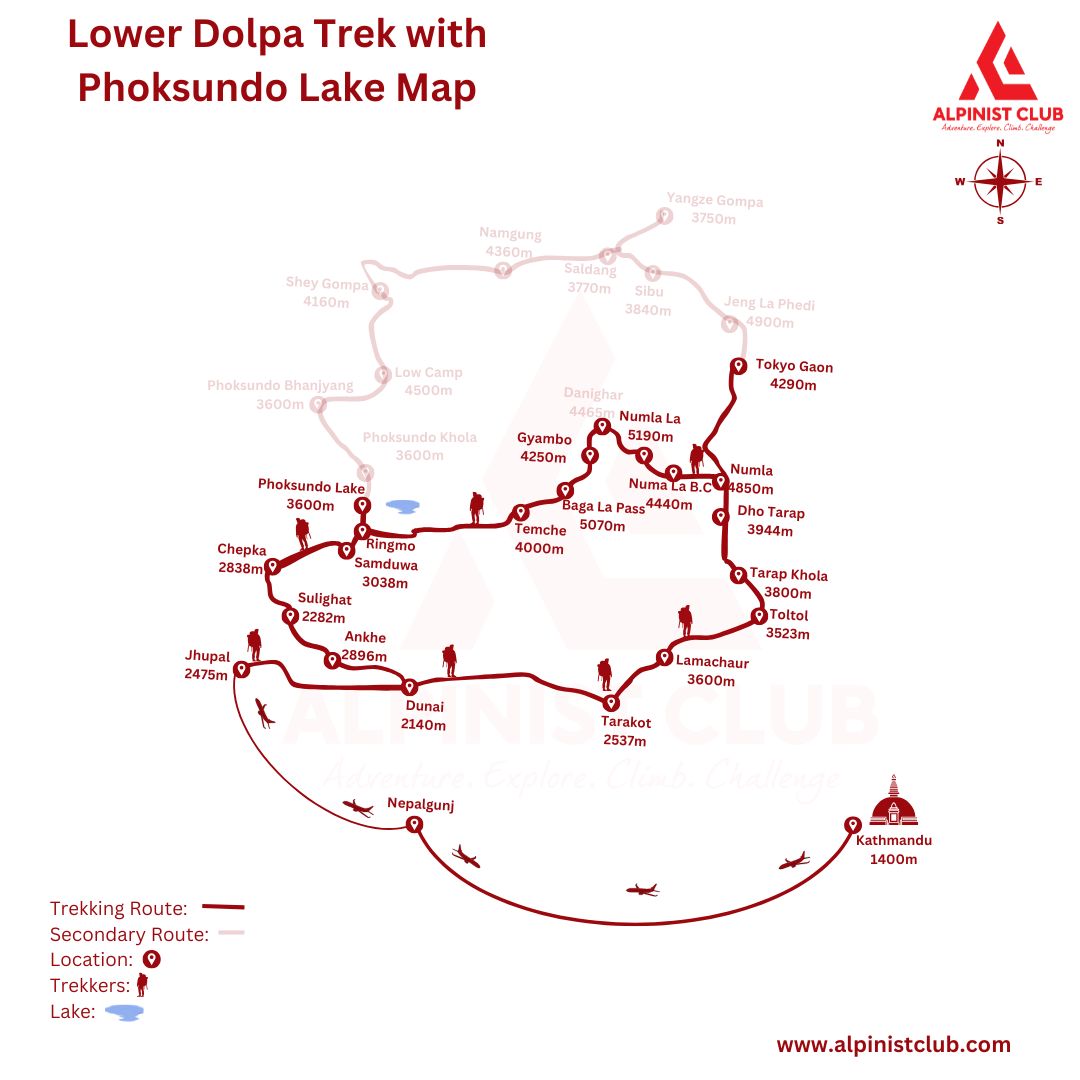
    Trip Map

    Map Image

    As previously stated, this walk has been categorized as moderate in difficulty and is appropriate for hikers of all skill levels. The routes, however, can be very difficult for beginners.

    The Numa La Pass, at 5,190 meters (17,000 feet) above sea level, is the highest point on the Lower Dolpo Trek.

    Permits are required for this trek. To finish this trek, you will need a lower Dolpo restricted area entry permit. Throughout your entire journey, you should always have this permit with you. This permit is non-refundable and non-transferable.

    Yes, this trek requires training. Technical training is not necessary, but physical fitness is recommended. Exercise like swimming, running, quick treks, etc. must be done to have a better experience. You must raise your stamina.

    The accommodations offered for the Lower Dolpo Trek vary according to the trek style and route. There are alternatives for tea houses, camping, homestays, and lodges, but the quality of the lodging might be basic, and in some locations, hot showers and power might not be accessible.

    The Lower Dolpo Trek is best done between May and September, when the weather is consistent and clear, and the views are at their best. However, the trek can be attempted during other seasons as well.

    The Lower Dolpo trip is not appropriate for beginners and is regarded as a difficult trip. High altitude, rough terrain, and lengthy walking days are all part of the trek. It is advised to have some prior trekking experience and to be physically fit.

    Good quality trekking equipment, warm clothes, a sleeping bag, a waterproof jacket, a hat, gloves, and sunscreen are all necessary for the Lower Dolpo Trek. 

    The following tips can help you to overcome altitude sickness : 
    Keep yourself hydrated by drinking lots of water. 
    Bring energy bars with you for the hike.
    Take it slow.
    Avoid drinking and smoking during the entire journey.

    Hospital and medical facilities are limited. There aren't many medical services along the Lower Dolpo Trek, so it's crucial to be ready for everything. A first-aid kit should be provided by your trekking agency, and it is a good idea to have a personal medical bag that has necessary supplies like antibiotics, blister remedies, and pain relievers. You must see a doctor before the trek if you have any pre-existing medical issues.

    Send Review